Fertilizer
Higher Sulfur Fertilizer Costs Put More Weight on Field-by-Field Decisions
Sulfur fertilizer costs remain elevated, but Nebraska Extension says many fields may not need extra sulfur. The strongest response risk is concentrated in coarse, low-organic-matter soils, making soil, water and field history more important before applying.
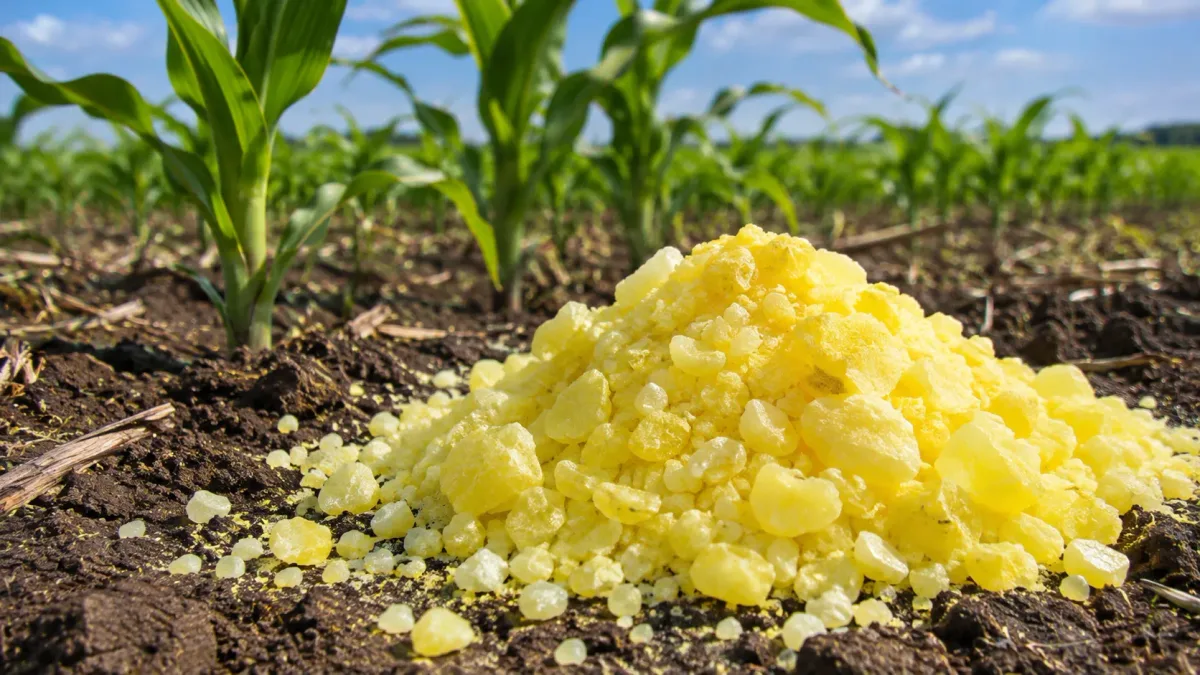
Higher fertilizer costs are putting more pressure on growers to separate nutrients that are likely to produce a return from applications that may add expense without increasing yield.
A November 5 analysis from Nebraska Extension focused on sulfur, a nutrient that has received increasing attention in corn and other crops as sulfur deposition from the atmosphere has declined and crop removal has increased.
The Extension analysis shows why sulfur decisions can be especially field-specific. Most Nebraska soils generally supply enough sulfur for corn, while the strongest probability of a yield response occurs on coarse-textured soils with low organic matter and limited alternative sulfur sources.
Regional fertilizer prices add to the importance of making that distinction. Using an October USDA Agricultural Marketing Service benchmark, Nebraska Extension estimated that a 20-pound-per-acre sulfur application could cost roughly $16 to $23 per acre depending on the fertilizer source, before crediting the nitrogen contained in those products.
Those figures are regional price examples rather than local quotes. The larger question for growers is whether a field has enough risk factors to make a sulfur response likely in the first place.
Key Facts
- Ammonium thiosulfate averaged $415 per ton in the October 16, 2026 USDA AMS Oklahoma price report used by Nebraska Extension, 14.7% above its September 2025 comparison.
- Ammonium sulfate averaged $553 per ton in the same benchmark, compared with $549 per ton in the 2025 comparison period, an increase of 0.8%.
- At those benchmark prices, supplying 20 lb S/acre cost about $16 per acre with ammonium thiosulfate or $23 per acre with ammonium sulfate before crediting their nitrogen value.
- Nebraska Extension says most Nebraska soils generally supply enough sulfur for corn, with yield responses most likely on coarse-textured soils low in organic matter.
- About 73% of Nebraska irrigation wells supply more sulfur in 10 inches of irrigation water than a crop removes at harvest, making irrigation-water sulfur an important nutrient credit.
- Nebraska research indicates that sulfur rates above 25 lb S/acre are not expected to increase crop yield, although field-specific recommendations depend on soil, water, organic matter and other conditions.
What the Source Reported
Nebraska Extension's analysis starts with a basic economic question: before adding sulfur to a fertilizer program, is there a documented reason to expect the field to respond?
The article used USDA Agricultural Marketing Service fertilizer prices from Oklahoma because Nebraska does not have an equivalent USDA series for the sulfur products being compared. In the October 16 benchmark, ammonium thiosulfate, or ATS, averaged $415 per ton, compared with $362 in the September 2025 comparison. Ammonium sulfate averaged $553 per ton compared with $549.
Based on the sulfur concentration of the products, those prices worked out to approximately $0.80 per pound of sulfur from ATS and $1.15 per pound from ammonium sulfate. A 20-pound sulfur application therefore cost roughly $16 or $23 per acre, respectively, before accounting for the value of the nitrogen supplied by each fertilizer.
Those prices are regional benchmarks rather than Nebraska farm quotes, and fertilizer prices continue to change. Growers evaluating an application should therefore replace the example prices with their own current supplier quote.
Whether sulfur is likely to improve yield depends heavily on field conditions. Nebraska research generally finds adequate sulfur supply across much of the state's corn ground. Responses are most likely on sandy or otherwise coarse-textured soils with low organic matter.
Nebraska Extension identifies several conditions that raise the probability of sulfur deficiency, including coarse soil texture, organic matter below 1%, heavy grass residue under no-till, no recent manure history, limited sulfur from irrigation water and high crop sulfur removal. The probability becomes greater when several of those conditions occur together rather than relying on a single factor.
Water can substantially change the calculation. Nebraska research found that approximately 73% of irrigation wells supply more sulfur in 10 inches of irrigation water than crops remove at harvest. Water containing meaningful sulfate can therefore reduce or eliminate the need for a separate sulfur application.
Manure can provide another sulfur credit. The Extension analysis notes that sulfur content varies by manure source and recommends testing rather than assuming a fixed nutrient contribution.
The source also cautions against interpreting early-season color changes as proof of an economic yield response. On medium- and fine-textured Nebraska soils, sulfur can sometimes make corn appear greener during cool conditions without producing additional grain yield.
When the need for sulfur remains uncertain, Nebraska Extension recommends replicated field comparisons rather than relying on a single treated strip or visual observation.
Why It Matters
Sulfur is usually a smaller fertilizer expense than nitrogen, phosphorus or potassium, but an unnecessary application still reduces the margin available from each acre.
At the October price benchmark used in the Nebraska analysis, a 20-pound sulfur application represented roughly $16 to $23 per acre before application expenses and before crediting the nitrogen in the fertilizer. A field that does not respond has little opportunity to recover that cost through additional grain.
That makes field selection more important when input costs are elevated.
A coarse-textured field with low organic matter, no manure history and little sulfur in the irrigation water presents a different nutrient-risk profile from a fine-textured field with higher organic matter and sulfur-rich groundwater. Treating those acres identically may spend fertilizer dollars where the probability of response is low.
Irrigated producers have an additional reason to test water. Nutrients supplied through irrigation are easy to overlook because they do not arrive on a fertilizer invoice, but they can materially change how much supplemental sulfur a crop needs.
The same principle applies to manure and other nutrient sources: credits should be included before determining how much fertilizer to purchase.
The Nebraska recommendations should not be treated as universal sulfur rates for every U.S. production region. Soil parent material, rainfall, irrigation water, organic matter, crop rotation and local research differ substantially. Producers outside Nebraska should use locally validated Extension recommendations and current soil, water and tissue information.
The broader lesson applies well beyond Nebraska: when fertilizer is expensive, a nutrient application should be tied to a credible probability of crop response rather than automatically included in every program.
What to Watch Next
Current local fertilizer quotes are the first thing to check. The price examples in Nebraska Extension's November analysis are based on an October 16 USDA AMS Oklahoma report, and regional fertilizer prices can change between reporting periods.
Growers considering sulfur should also review the field characteristics that influence deficiency risk rather than relying on fertilizer price alone. Soil texture, organic matter, manure history, irrigation-water sulfate and crop removal all affect the likelihood of a response.
For irrigated acres, testing irrigation water can be particularly useful because sulfur supplied through a pivot can contribute a meaningful share of crop demand. Soil and plant testing can provide additional evidence where deficiency is suspected.
Fields with uncertain sulfur response are good candidates for replicated on-farm strips. Repeating treated and untreated comparisons provides a stronger test than one side-by-side pass and can help determine whether the response is large enough to cover the fertilizer and application cost.
Future USDA AMS regional production-cost reports will provide updated fertilizer price benchmarks, but growers should compare those reports with actual local dealer quotes.
As spring planting approaches, the most useful question is not simply whether sulfur prices move higher or lower. It is whether the individual field has a realistic probability of producing enough additional yield to pay for the application.
Related Farm Market Tool Resources
Source
University of Nebraska–Lincoln CropWatch
Managing High Fertilizer Costs: Apply Sulfur Where It Is Likely to Pay
Source published
https://cropwatch.unl.edu/managing-high-fertilizer-costs-apply-sulfur-where-it-likely-pay/
View original sourceFarm Market Tool provides agriculture news and data summaries for informational purposes. Verify important production and business decisions with original sources and appropriate local professionals. Read the Data Disclaimer.