Livestock
Iowa Cattle Grazing Program Gets $10 Million Federal Expansion
A new $10 million, five-year RCPP investment will expand Iowa's Cattle and Conservation Working Lands Program, helping producers convert underperforming or highly erodible cropland to pasture and hay while supporting water-quality and soil-conservation goals.
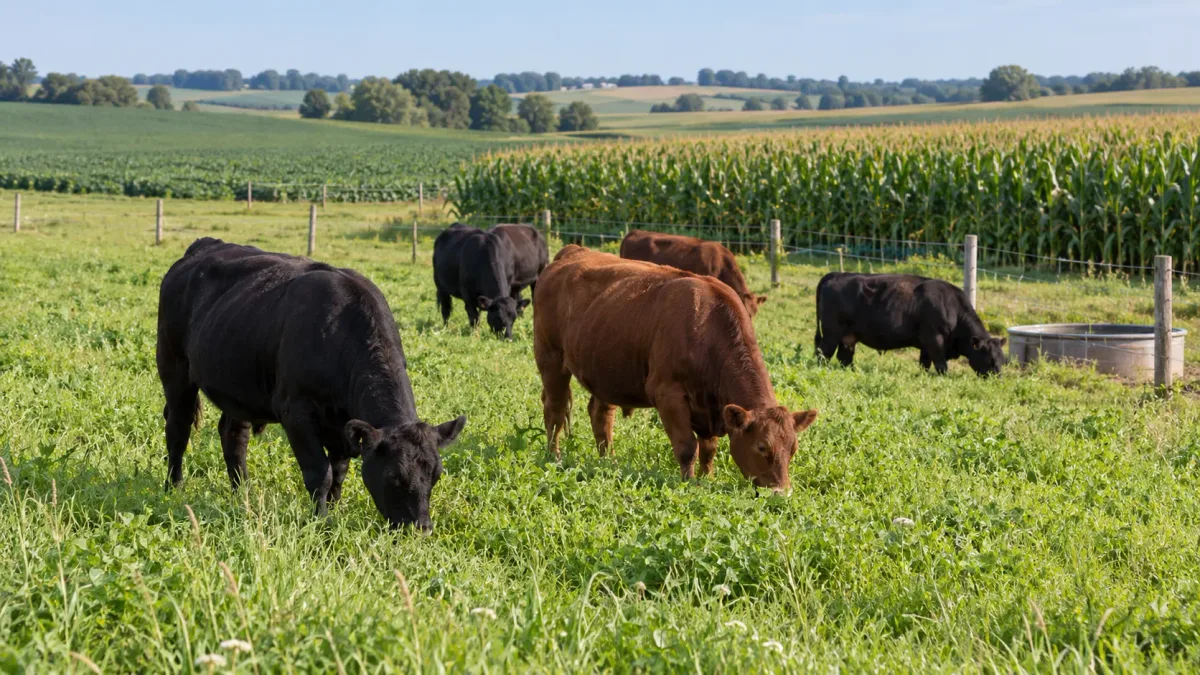
Iowa's Cattle and Conservation Working Lands Program is receiving a new $10 million federal investment to expand efforts that move underperforming cropland into pasture, hay and other livestock-supporting conservation uses.
The five-year investment comes through the Regional Conservation Partnership Program administered by the Natural Resources Conservation Service. It builds on a program Iowa first launched as a pilot in Taylor County in 2016 and has since expanded across additional parts of the state.
The program is designed around a practical tradeoff: keep agricultural land productive while shifting acres that are highly erodible or perform poorly as row crops into uses that can support cattle and reduce soil and nutrient losses.
The new funding does not mean every Iowa cattle producer automatically receives federal assistance. Participation, available practices, cost-share rates and geographic eligibility depend on the program rules and project implementation in the producer's area.
Key Facts
- The new Iowa Working Lands Water Quality Project will receive $10 million through USDA NRCS's Regional Conservation Partnership Program over a five-year period.
- The Cattle and Conservation Working Lands Program helps producers convert underperforming or highly erodible row-crop acres into pasture and hay ground.
- Iowa says the program has already enrolled more than 1,800 participants, converted about 20,000 acres of cropland to pasture or hay, and supported more than 300,000 acres of cover crops.
- The new RCPP project is expected to support more than 300,000 acres of cover crops while strengthening grazing systems and other working-land conservation practices.
- NRCS projects that the five-year project could reduce roughly 3.3 million pounds of nitrogen loss, 336,000 pounds of phosphorus loss and 1 million tons of soil loss.
- The project is a partnership involving the Iowa Department of Agriculture and Land Stewardship, Iowa Agriculture Water Alliance, Iowa Cattlemen's Association and Ducks Unlimited.
What the Source Reported
The Iowa Department of Agriculture and Land Stewardship announced the new $10 million investment on October 26 as an expansion of the state's existing Cattle and Conservation Working Lands Program.
Funding comes through the Natural Resources Conservation Service's Regional Conservation Partnership Program, commonly known as RCPP. The new project is formally listed as the Iowa Working Lands Water Quality Project and is scheduled as a five-year investment.
The program focuses on acres that may be less productive in continuous row-crop production or particularly vulnerable to erosion. Producers can use participating acres for pasture or hay, keeping them in agricultural production while creating forage and grazing capacity.
The broader RCPP project also includes conservation practices beyond pasture conversion. NRCS says the project will integrate cover crops, forage and biomass plantings, watering systems and other practices across western and central Iowa.
NRCS expects the project to result in more than 300,000 acres of cover crops. Its project summary also estimates reductions of roughly 3.3 million pounds of nitrogen, 336,000 pounds of phosphorus and 1 million tons of soil loss over the life of the project. Those numbers are projected conservation outcomes, not results already achieved.
The state says the existing Working Lands program has already grown substantially since its 2016 pilot. More than 1,800 participants have taken part, approximately 20,000 acres of underperforming cropland have been converted to pasture or hay, and more than 300,000 acres of cover crops have been planted.
Demand for the program has also been strong. State funding made available earlier in 2026 through Iowa's Farm to Faucet package was fully obligated within 10 days of a major August expansion. Iowa later directed an additional $2.1 million in funding to support more pasture and hay conversions through the end of 2026.
The new federal RCPP funding is intended to build on that demand and give the program more flexibility to expand conservation and grazing infrastructure into additional areas.
Why It Matters
For cattle producers, land availability and forage supply can be major constraints when deciding whether to maintain or expand a herd.
The Iowa program tries to address part of that problem by identifying row-crop acres that may make more economic and conservation sense as pasture or hay ground. On those acres, livestock production becomes another way of keeping the land productive rather than removing it entirely from agricultural use.
The conservation side of the program is closely connected to that land-use decision. Permanent forage and pasture can reduce exposed soil, slow runoff and reduce nutrient movement compared with repeatedly cultivating highly erodible ground.
Cover crops add another livestock connection by providing forage while keeping living roots and crop residue on fields outside the main growing season.
There can also be a farm-economics benefit when producers stop treating every acre as though it has the same row-crop potential. An acre that regularly produces weak crop returns may have a different value in a grazing or forage system, particularly for an operation that already owns cattle.
That does not mean conversion is automatically profitable. Fencing, water systems, cattle handling, hay equipment, land values, forage yields and management requirements all affect the economics.
Current Iowa program materials list one-time cost-share rates of $290 per acre for converting cropped acres to hay and $1,000 per acre for converting cropped acres to pasture under five-year agreements. Producers should verify the latest rates and eligibility before making decisions because the new RCPP funding may support additional practices or operate under different terms.
What to Watch Next
The next important detail will be how the new RCPP funding is translated into producer-level opportunities.
Iowa officials have said the funding gives the program more flexibility to support infrastructure improvements and expand into additional counties. Producers should watch for updated information on eligible counties, available conservation practices, cost-share rates and application procedures.
Implementation of the new Iowa Working Lands Water Quality Project will also show whether the program can reach the conservation outcomes included in the NRCS project plan, including expanded cover-crop acreage and reductions in nitrogen, phosphorus and soil loss.
Producer demand will be another useful measure. Earlier funding for the Working Lands program was committed quickly after the 2026 expansion, suggesting strong interest in converting some crop acres to pasture and hay.
Farmers considering participation should compare the program payment with the economics of the acres they may convert, including expected crop returns, forage value, fencing and water costs, cattle needs and the length of any maintenance agreement.
Iowa currently directs interested farmers and landowners to its conservation cost-share resources or their local USDA Service Center for current program details.
Related Farm Market Tool Resources
Source
Iowa Department of Agriculture and Land Stewardship
Secretary Naig Welcomes Significant USDA Investment in Iowa Cattle and Conservation Working Lands Program
Source published
https://iowaagriculture.gov/news/USDA-invest-cattle-conservation
View original sourceFarm Market Tool provides agriculture news and data summaries for informational purposes. Verify important production and business decisions with original sources and appropriate local professionals. Read the Data Disclaimer.