Crop Markets
U.S. Corn Harvest Trails Five-Year Pace as Soybeans Near Normal
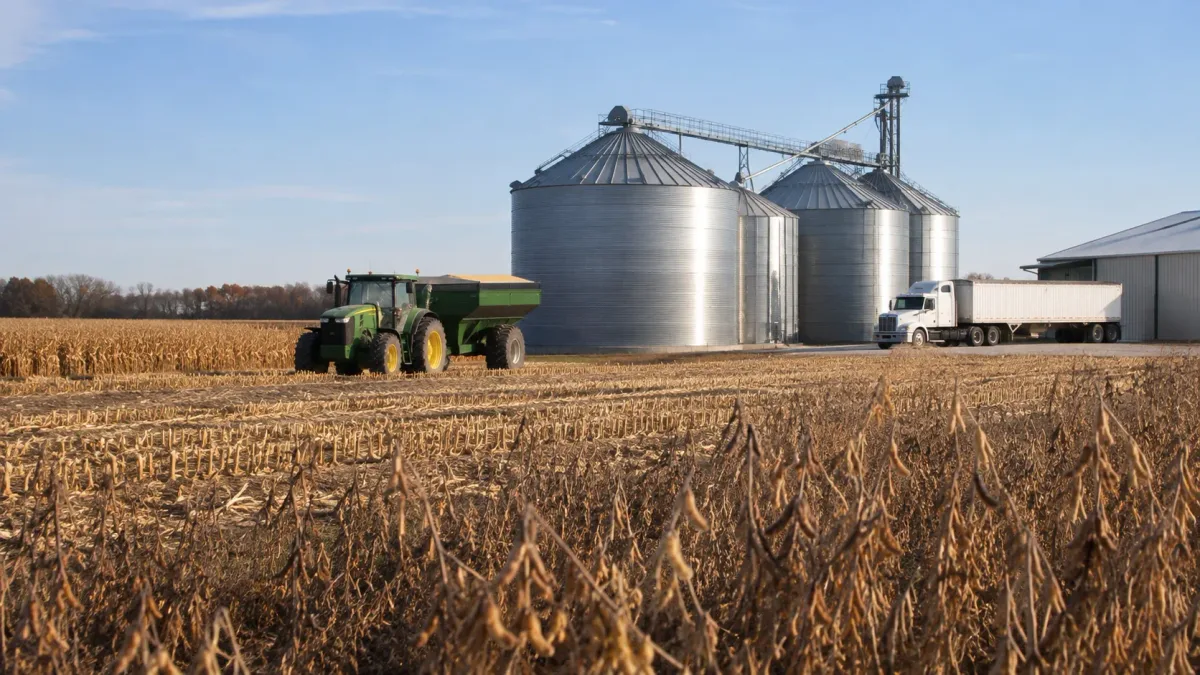
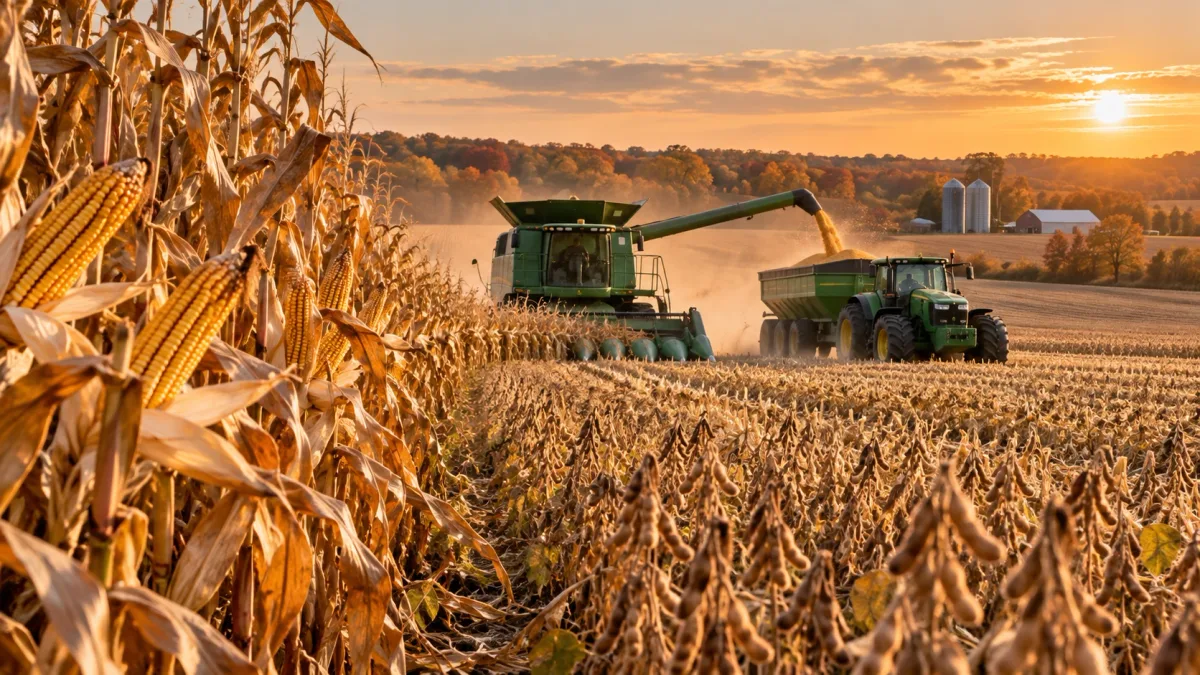
U.S. corn harvest reached 44% by October 18, eight percentage points behind the 2021–2025 average, while soybean harvest advanced to 64%, just one point below its five-year pace. State-level data show much larger delays across parts of the Corn Belt.
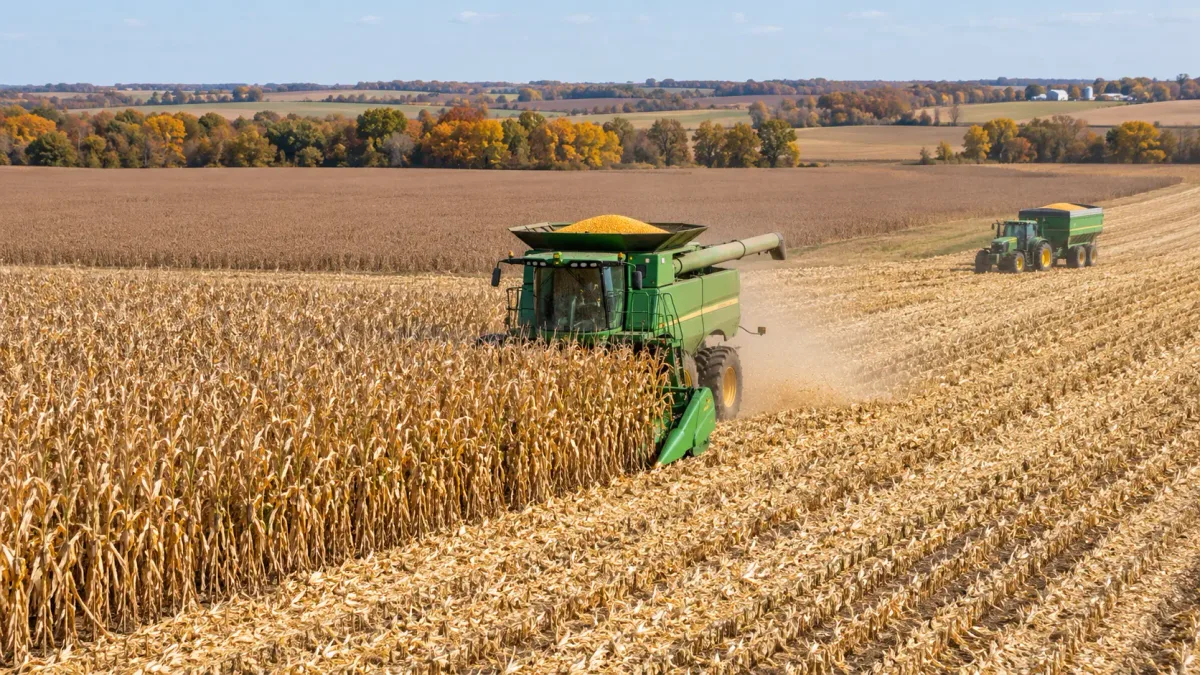
Corn harvest made substantial progress during the week ending October 18, but the national pace remained behind its recent average across several major producing states.
The National Agricultural Statistics Service reported that 44% of corn acreage had been harvested across the 18 states included in its national estimate. That was up from 33% one week earlier but remained below the 2021–2025 average of 52%.
Soybean harvest moved faster during the same week. National progress increased from 46% to 64%, leaving soybean harvest just one percentage point behind its five-year average.
The national totals hide much larger differences between states. Corn harvest remained particularly far behind its recent pace in Iowa, Michigan, Minnesota and South Dakota, while several other states were at or ahead of their historical averages.
These figures measure harvest progress rather than final production, crop quality or market prices. A slower harvest does not by itself establish that national yields will be lower or that commodity prices will move in a particular direction.
Key Facts
- Corn harvest across the 18 major states reached 44% by October 18, up from 33% one week earlier but below the 2021–2025 average of 52%.
- Iowa corn harvest was 26% complete compared with a five-year average of 50%, while Michigan was at 13% versus 31% and South Dakota was at 29% versus 47%.
- Soybean harvest reached 64% nationally by October 18, up from 46% one week earlier and just one percentage point below the 2021–2025 average of 65%.
- Soybean harvest remained well behind its five-year pace in Iowa at 57% versus 74%, Nebraska at 52% versus 71%, and Michigan at 37% versus 51%.
- National corn maturity reached 95% by October 18, close to the 96% five-year average, even though harvested acreage remained eight percentage points behind its average pace.
- Comparable October 2025 Crop Progress estimates are unavailable because reports were canceled during a federal funding lapse; NASS says its 2021–2025 averages include imputed estimates for 2025.
What the Source Reported
The October 19 Crop Progress report shows that U.S. corn harvest accelerated during the previous week but continued to trail its recent historical pace.
Across the 18 states that accounted for 93% of the 2025 corn acreage harvested for grain, 44% of the 2026 crop had been harvested by October 18. That was an 11-percentage-point increase from the previous week's 33%, but it remained below the 2021–2025 average of 52%.
The national figure masks substantial differences among major producing states.
Iowa reported 26% of its corn harvested compared with a five-year average of 50%. Minnesota stood at 38% versus 53%, Michigan at 13% versus 31%, Nebraska at 37% versus 48%, Ohio at 21% versus 33%, and South Dakota at 29% versus 47%.
Not every state was running behind. Illinois had harvested 63% of its corn compared with a five-year average of 58%. Kentucky was at 86% versus 75%, North Dakota at 42% versus 36%, and Tennessee at 96% versus 85%.
Crop maturity was much closer to its normal national pace. Ninety-five percent of corn was reported mature across the 18 states, compared with a five-year average of 96%. That distinction is important because harvest progress and crop maturity measure different stages of the season.
Soybean harvest was considerably closer to normal at the national level. Across the 18 states representing 96% of the previous year's soybean acreage, harvest increased from 46% on October 11 to 64% by October 18. The five-year average for that date is 65%.
Several important soybean-producing states remained behind. Iowa was 57% harvested compared with a 74% average, Nebraska was at 52% versus 71%, Michigan at 37% versus 51%, Kansas at 41% versus 53%, and Ohio at 48% versus 59%.
Other states were ahead of their recent pace. Arkansas had harvested 87% of its soybean acreage compared with a 69% average, Kentucky was at 64% versus 47%, Mississippi at 96% versus 82%, Tennessee at 75% versus 51%, and Wisconsin at 72% versus 63%.
The report does not provide a single national cause for the differences in harvest progress. Its role is to measure crop development and field progress by state, not to determine the economic impact of a slower harvest or predict commodity prices.
Why It Matters
Harvest progress matters operationally because the timing of fieldwork affects how quickly grain moves from fields into on-farm storage, elevators and the wider transportation system.
For corn growers in states running well behind their usual pace, a compressed harvest window can make machinery availability, labor, grain drying, storage capacity and transportation more important planning considerations. The Crop Progress report does not quantify those costs, so a national harvest percentage should not be treated as a measure of an individual farm's financial outcome.
The difference between corn maturity and corn harvest is also useful. National corn maturity was close to its five-year average, while harvest remained eight percentage points behind. A crop can therefore be mature without immediately appearing in the harvested-acreage total.
Soybeans present a different national picture. At 64% harvested, the crop was almost exactly on its recent five-year pace. Even so, farmers in Iowa, Nebraska, Michigan and Ohio were still dealing with considerably slower progress than the national number suggests.
That regional variation is why national percentages should be compared with state and local conditions rather than used on their own.
Harvest progress should also be separated from production forecasts. The number of acres already harvested does not establish the final national yield, total production, crop quality, local basis or futures direction. Those questions require separate production and market data.
What to Watch Next
The next Crop Progress report is scheduled for October 26, 2026. The main question will be whether the national corn harvest gap begins to narrow after reaching 44% compared with the current five-year average of 52%.
State-level progress will be especially important in Iowa, Michigan, Minnesota, Nebraska, Ohio and South Dakota, where corn harvest remained substantially behind recent averages on October 18.
For soybeans, the national harvest was already close to its normal pace, so the more useful comparison will be whether large state-level gaps in Iowa, Nebraska, Michigan and Ohio continue to close.
Crop Progress reports are scheduled weekly through the end of November, allowing the remaining harvest to be tracked as the season advances.
The next Crop Production report is scheduled for November 10, 2026. That release should be read separately from the weekly progress figures because it updates production and yield estimates rather than simply measuring how much acreage has been harvested.
At the farm level, producers can compare these national and state statistics with local field conditions, grain moisture, drying requirements, storage availability and elevator movement. Those local factors can differ substantially even when two states show similar harvest percentages.
Related Farm Market Tool Resources
Source
USDA National Agricultural Statistics Service (NASS)
Crop Progress
Source published
https://esmis.nal.usda.gov/publication/crop-progress/2026-10-19
View original sourceFarm Market Tool provides agriculture news and data summaries for informational purposes. Verify important production and business decisions with original sources and appropriate local professionals. Read the Data Disclaimer.